
Turning Point

Delivery Methods

LIVE VIRTUAL TRAINING

Join interactive sessions via Zoom/Teams. Engage with trainers and peers in real-time, access recordings post-session, and complete hands-on activities remotely. Ideal for global teams or those seeking flexibility.

FACE-TO-FACE ON-SITE TRAINING

Experience immersive learning at your organization or our training center. Benefit from in-person networking, practical demonstrations, and tailored group exercises. Perfect for team-building and role-specific skill development.

Course Overview

What is Enneagram? 

The Enneagram is a powerful framework for self-awareness and professional growth. It

offers deep insights into personality, behavior, and underlying motivations, helping

individuals and managers understand the values and drivers that shape their actions.

In organizational settings, the Enneagram is invaluable for identifying the root causes

of stress, miscommunication, and conflict, both within teams and at the individual

level. By illuminating core identity patterns and fostering emotional intelligence, the

Enneagram empowers professionals to enhance collaboration, improve

communication, and create a more cohesive and effective workplace environment.

Instincts and Subtypes

Understanding Instincts and Subtypes offers a crucial dimension of insight into

human behavior, motivation, and interaction. Rooted in biological theory and the

Enneagram system, this model explores how core survival instincts: self-preservation,

social belonging, and one-to-one bonding, shape distinct personality expressions in

the workplace. By uncovering these instinctual drives and their influence on team

dynamics, leadership styles, and communication patterns, this approach equips

professionals to manage differences  more effectively, reduce tension, and harness the

unique strengths of each instinctual subtype. It is an essential tool for building

empathy, improving collaboration, and cultivating resilient, high-performing teams.

Topics covered include: instinctual drives, the 27 enneagram subtypes, dealing with

our instinctual blind spots.

Recommended number of attendees: 12 to 18

Prerequisite: The Enneagram (ECP or EPP)

About the trainer 

Dr. Khaled ElSherbini

Dr. ElSherbini, a transpersonal psychologist, PCC coach, and former aerospace

scientist, is one of the leading international Integral Consciousness and Enneagram

teachers and trainers in the world today. He is the visionary founder of the largest

accredited Enneagram school in the Middle East and North Africa, “Consciousness

Academy”, and the creator of 4 comprehensive year-long transformational accredited

programs, including his unique ICF Level 2 program: Conscious Coaching.

Dr. ElSherbini dedicates his expertise to the realms of consciousness, personal

development, and psycho-spiritual transformation, presenting frequently in

Enneagram and Integral conferences worldwide, always to great acclaim. For a

complete portfolio of Dr. ElSherbini visit: https://consciousness-academy.com/dr-

Khaled-elsherbini. 

Course curriculum

Module 1: Introduction to Instincts and Subtypes
– Link between biological theory and the Enneagram system – Core survival instincts in human behavior

Module 2: The Three Instinctual Drives
– Self-preservation – Social belonging – One-to-one bonding

Module 3: The 27 Enneagram Subtypes
– Exploration of subtype variations – Workplace expressions of instinctual patterns

Module 4: Instinctual Blind Spots
– Recognizing personal blind spots – Managing challenges in interactions and teamwork

Module 5: Application in the Workplace
– Influence on team dynamics and collaboration – Impact on leadership styles and communication – Harnessing strengths of different subtypes

Key Takeaways

What I will learn?

  • Understand the role of instinctual drives in shaping personality and workplace behavior
  • Learn the 27 Enneagram subtypes and their practical implications
  • Identify and address instinctual blind spots that create tension
  • Apply insights to improve leadership, teamwork, and communication
  • Build empathy and resilience for high-performing, collaborative teams

Who should attend this course?

Target Audience

  • Professionals already familiar with the Enneagram (prerequisite: ECP or EEP)
  • Team leaders and managers aiming to strengthen collaboration and reduce conflict
  • HR and organizational development professionals working with diverse teams
  • Employees and teams seeking deeper self-awareness beyond core Enneagram types

Do You still need more help? contact our Program Enrollment Specialist

Nada Al-Awfi

Reply “JOIN

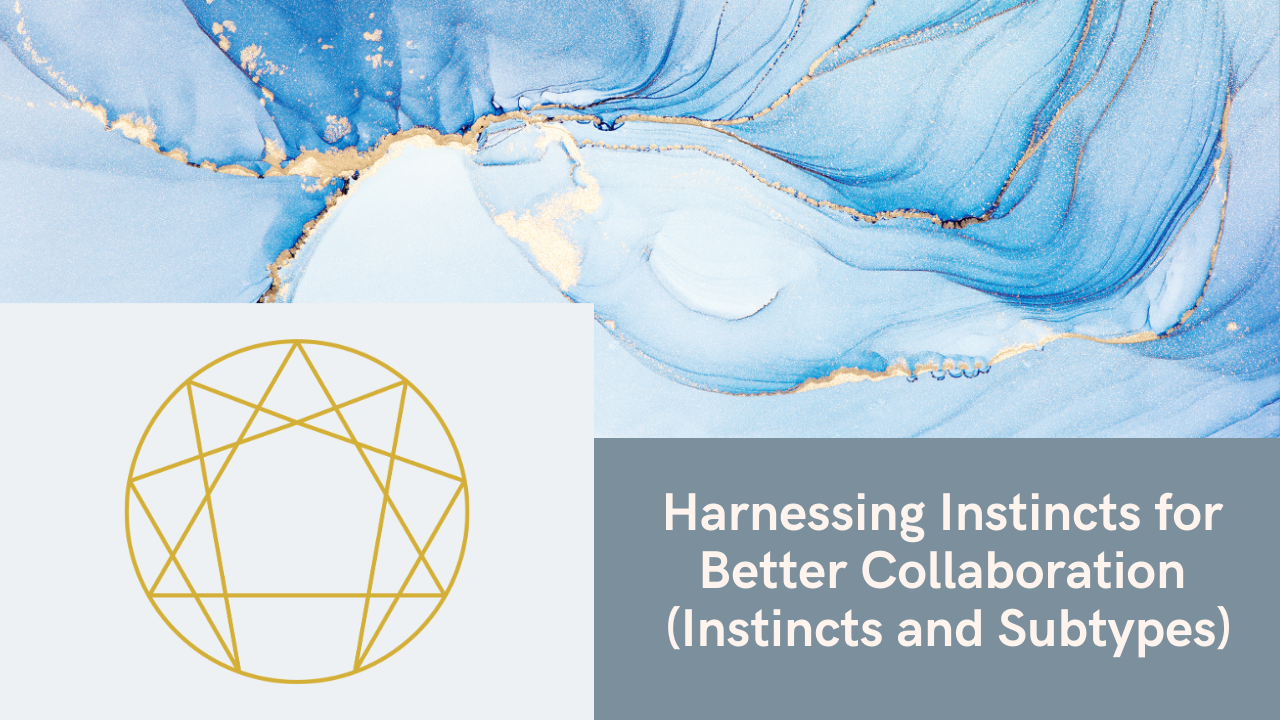
Harnessing Instincts for Better Collaboration(Instincts and Subtypes)

” to get started!

General FAQ

Are there any prerequisites to join?

Most courses are open-entry and require no prior training. For advanced or technical programs, we may recommend specific background knowledge or work experience, which will be stated in the course outline.

Yes. Upon successful completion, participants receive a Turning Point Training Institute Certificate of Completion, issued and attested by the KHDA (Knowledge and Human Development Authority) upon request. For customized on-the-job programs, participants may also earn CPD-accredited points, recognized by professional bodies internationally, also upon request.

Our courses are built for real-world impact through an On-the-Job Training (OJT) delivery model. We focus on field-relevant skills, actual workplace scenarios, and job-specific outcomes—ensuring participants apply what they learn directly within their day-to-day roles. Training is not limited to the classroom; it’s embedded into real tasks, real tools, and real-time operations to maximize relevance and retention.

In select cases, participants may be able to use their training experience as part of a Prior Learning Assessment (PLA) process to earn academic credit at a university. Turning Point acts as a facilitator—we help you document your learning, align it with academic standards, and prepare submissions. However, we do not guarantee credit transfer. Final decisions rest entirely with the admitting university, based on its internal criteria, policies, and case-by-case evaluation.

Tags

Want to receive push notifications for all major on-site activities?