Turning Point

Delivery Methods

LIVE VIRTUAL TRAINING

Join interactive sessions via Zoom/Teams. Engage with trainers and peers in real-time, access recordings post-session, and complete hands-on activities remotely. Ideal for global teams or those seeking flexibility.

FACE-TO-FACE ON-SITE TRAINING

Experience immersive learning at your organization or our training center. Benefit from in-person networking, practical demonstrations, and tailored group exercises. Perfect for team-building and role-specific skill development.

Course Overview

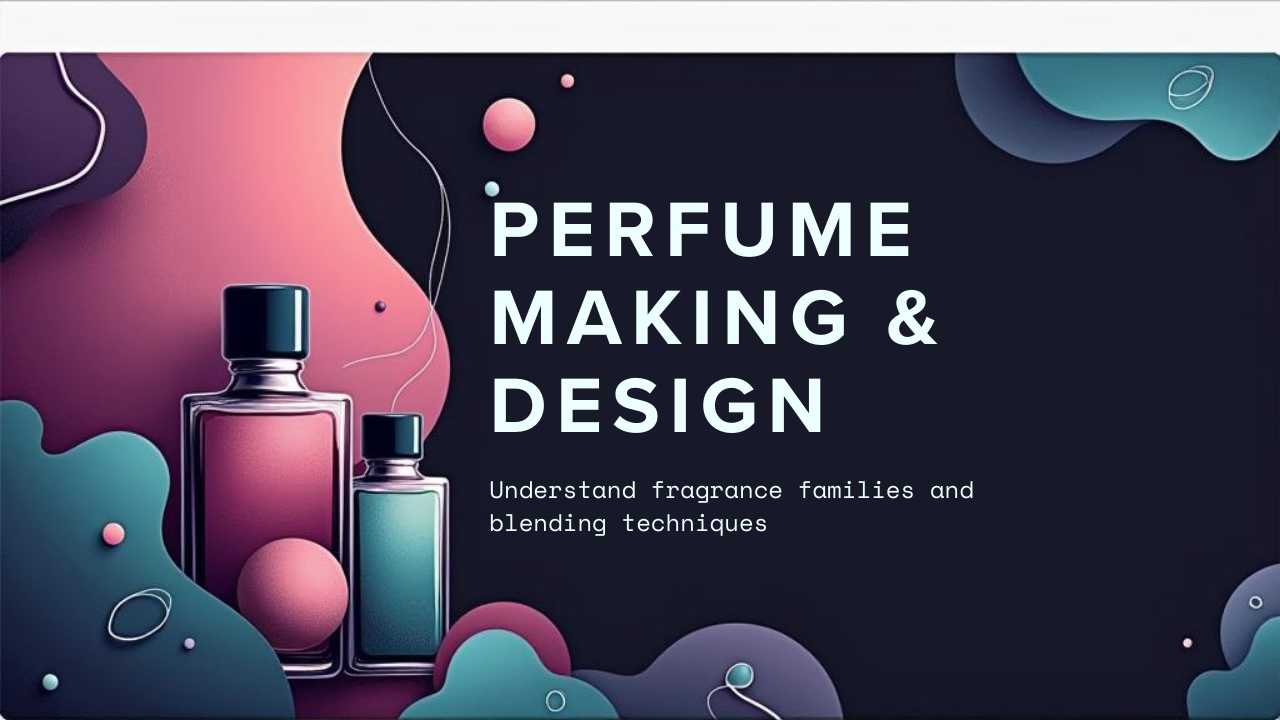
Perfume creation is both a science and an art—requiring knowledge of fragrance chemistry, design principles, and sensory balance. This course introduces participants to the foundations of perfume making, from raw materials and blending techniques to the creative process of designing signature scents. Learners will explore fragrance families, accords, and formulation methods while practicing hands-on blending. By the end, participants will understand how to design unique perfumes that reflect personal or brand identity and meet professional standards in the fragrance industry.


 

Course curriculum

Module 1: Introduction to Perfumery — History, science, and art of fragrance design

Module 2: Fragrance Families & Notes — Top, heart, and base notes explained

Module 3: Raw Materials — Essential oils, absolutes, aroma chemicals, and solvents

Module 4: Blending Techniques — Building accords and balancing formulas

Module 5: Practical Perfume Creation — Step-by-step hands-on formulation

Module 6: Evaluation & Refinement — Testing, stability, and sensory feedback

Module 7: Branding & Packaging — Positioning perfumes for market appeal

Module 8: Trends & Sustainability — Ethical sourcing and eco-friendly practices

Key Takeaways

What I will learn?

  • Understand fragrance families, notes, and accords
  • Learn raw materials, essential oils, and synthetic components
  • Apply blending techniques to create balanced perfumes
  • Develop olfactory skills through structured smell training
  • Design perfumes for personal use or commercial purposes
  • Explore packaging and branding considerations for fragrances
  • Gain insight into industry trends and sustainability in perfumery

Who should attend this course?

Target Audience

  • Aspiring perfumers and fragrance designers
  • Entrepreneurs interested in creating perfume brands
  • Cosmetic and beauty industry professionals
  • Creative professionals exploring scent design
  • Hobbyists passionate about fragrance crafting

Do You still need more help? contact our Program Enrollment Specialist

Nada Al-Awfi

Reply “JOIN

Perfume Making & Design course

” to get started!

General FAQ

Are there any prerequisites to join?

Most courses are open-entry and require no prior training. For advanced or technical programs, we may recommend specific background knowledge or work experience, which will be stated in the course outline.

Yes. Upon successful completion, participants receive a Turning Point Training Institute Certificate of Completion, issued and attested by the KHDA (Knowledge and Human Development Authority) upon request. For customized on-the-job programs, participants may also earn CPD-accredited points, recognized by professional bodies internationally, also upon request.

Our courses are built for real-world impact through an On-the-Job Training (OJT) delivery model. We focus on field-relevant skills, actual workplace scenarios, and job-specific outcomes—ensuring participants apply what they learn directly within their day-to-day roles. Training is not limited to the classroom; it’s embedded into real tasks, real tools, and real-time operations to maximize relevance and retention.

In select cases, participants may be able to use their training experience as part of a Prior Learning Assessment (PLA) process to earn academic credit at a university. Turning Point acts as a facilitator—we help you document your learning, align it with academic standards, and prepare submissions. However, we do not guarantee credit transfer. Final decisions rest entirely with the admitting university, based on its internal criteria, policies, and case-by-case evaluation.

Tags

Want to receive push notifications for all major on-site activities?